We are an Alliance Transforming neighborhoods and Disrupting concentrated poverty–One entrepreneur and storefront at a time.
Houston’s Third Ward
For Assata Richards, the work in Houston’s Third Ward is personal.
A founding board member of the Emancipation Economic Development Council (EEDC), Richards is part of an effort to revitalize the neighborhood without pushing out the people who have long called it home. The work begins with memory—what has been built, held, and sustained here over generations.
Richards is a third-generation resident. Her grandparents arrived from East Texas during the Great Migration. Before that, her family lived in one of Texas’s “free colonies,” small, self-sustaining communities formed after emancipation, often organized around a church, a school, and a corner store.
That sense of closeness still shapes the Third Ward. “The strength of this community has given me the opportunity to be held, seen, validated, and nurtured by a place,” Richards says.
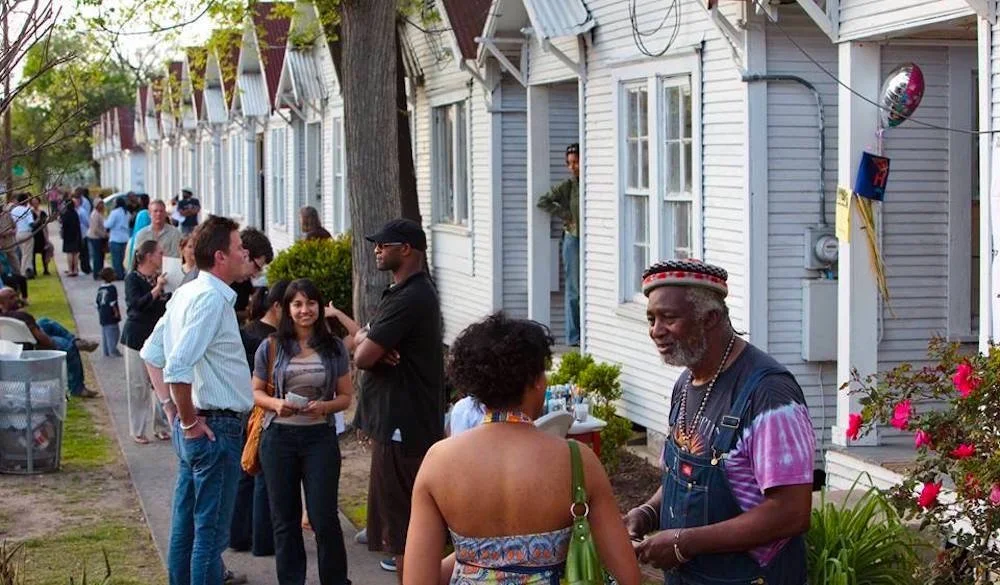
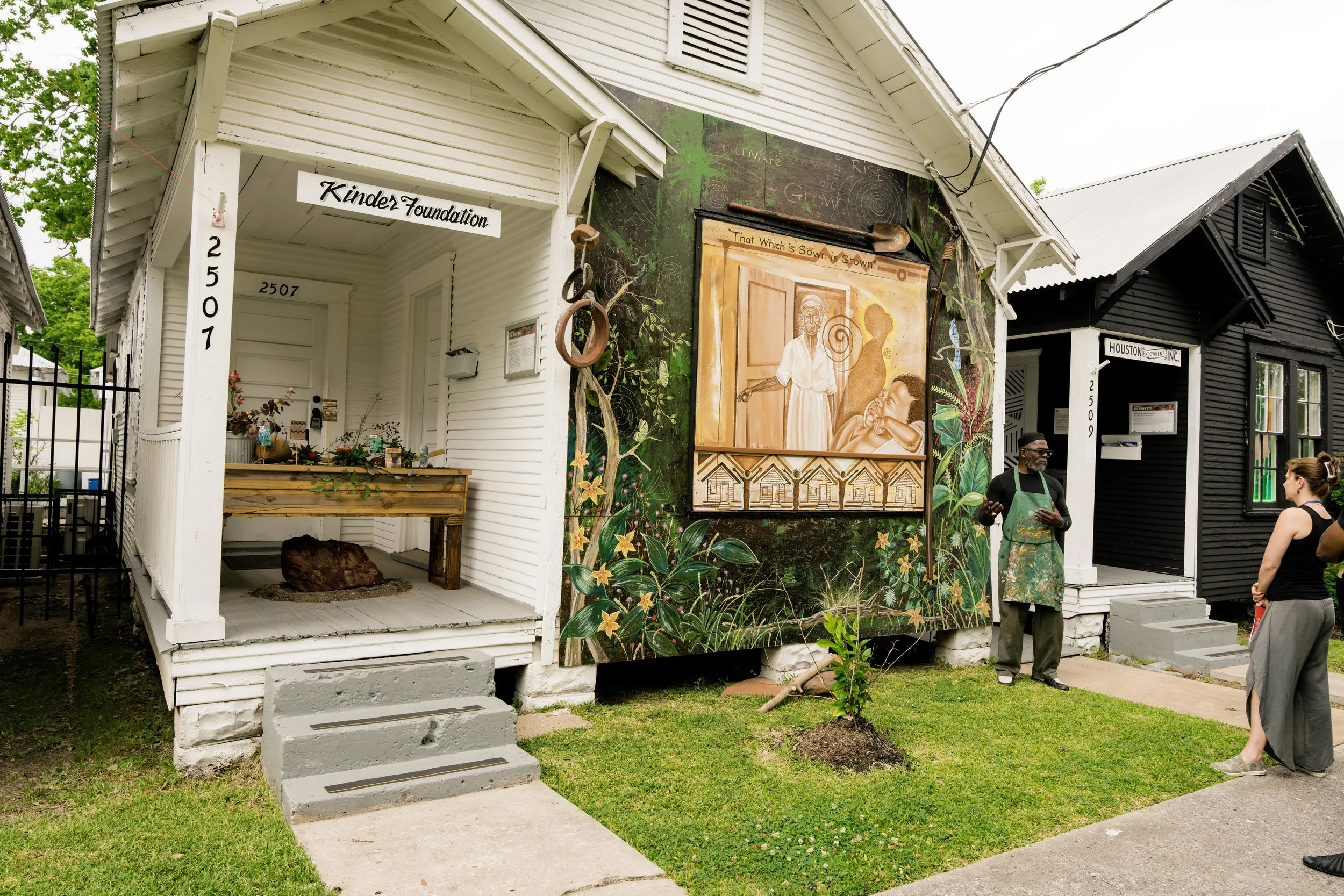
The neighborhood carries its history in its structures. The narrow, raised wooden houses were built for airflow and suited to the local climate. They reflect architectural traditions with roots in West Africa. Many have disappeared, but some remain, preserved and repurposed by groups like Project Row House.
A few blocks away, Emancipation Park stands as one of the clearest expressions of collective effort. In the late 19th century, newly emancipated Black residents pooled $800 to buy the land, creating a place to gather and celebrate freedom. For decades, it was the only public park and pool in Houston open to Black residents.
Nearby, Riverside General Hospital offered care to the Black community in a segregated system that otherwise denied it, while also training Black nurses and employing Black physicians.
These institutions still anchor the neighborhood, even as development pressure builds. Like many historically disinvested communities, the Third Ward is now facing encroachment from rising costs, new construction, and the slow erosion of what has long been rooted there.
EEDC has formed in response. The goal wasn’t only to preserve buildings, but to sustain the conditions that allow community to remain intact and thrive.
That search led them to the Build from Within Alliance. The national network treats residents as the drivers of economic change rather than its byproducts.
The Alliance model didn’t arrive without resistance. Bringing a framework from St. Paul into a neighborhood with such a specific history raised questions about fit, about control, about whether outside ideas could meet local needs.
But its flexibility is what allowed it to take hold. The model isn’t fixed; it adapts to the people using it. The organization committed, and since then more than 100 residents have graduated from its small business training program.
The premise is straightforward: investment should begin with the people already there. Not outside developers, not speculative growth, but residents with ideas, skills, and a stake in what happens next.
The Third Ward is now one of more than 50 communities using the Build from Within model. Each looks different, shaped by its own history and pressures. What connects them is a shared aim to build economic strength without displacement, and to ensure that the people who have sustained these neighborhoods remain part of their future.
In the Third Ward, that means holding onto what’s already there and building from it.